Small Apartment Reality Check
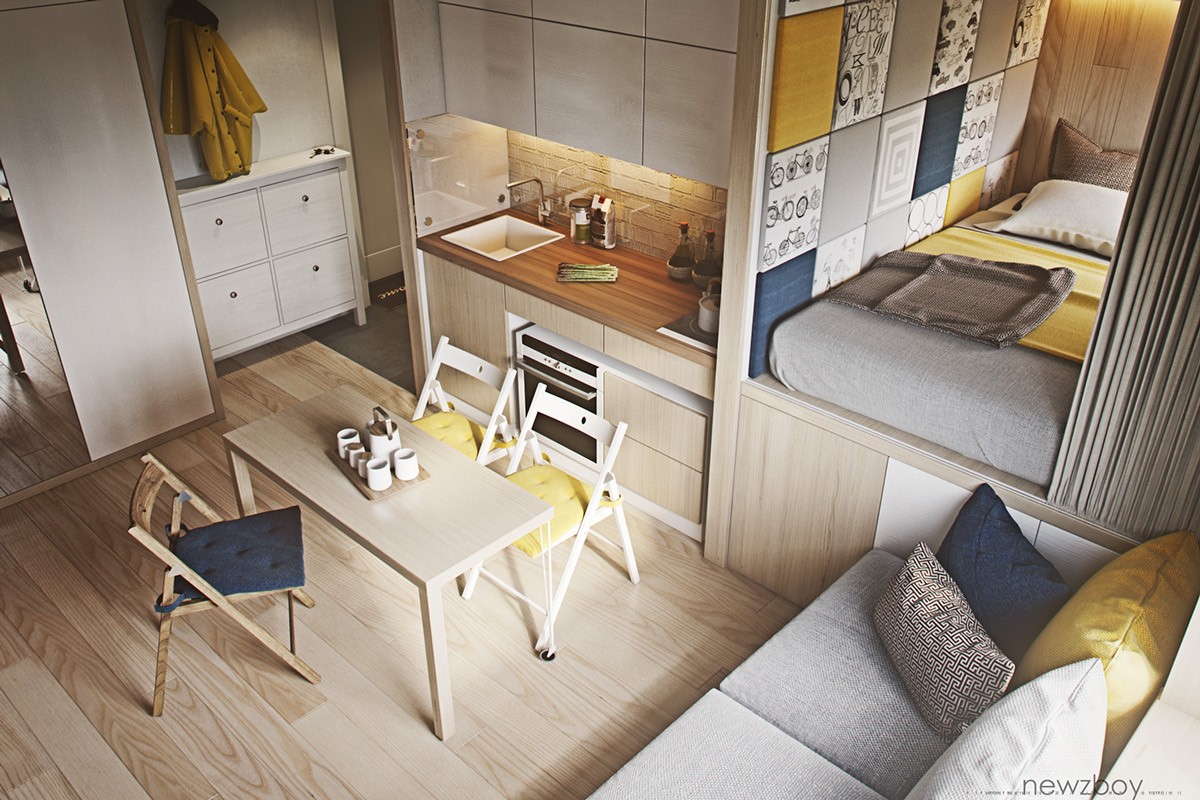
Small apartments feel tight when everyday systems clash: storage fights your habits, furniture blocks circulation, and lighting makes corners look smaller. A 450 sq ft studio can work well, yet the same layout can feel cramped if the bed, desk, and dining spot all compete for the same path. The goal is not to “fit more,” but to reduce friction in the routes you repeat daily.
Start with a simple map of movement. Walk the space in socks and note where you slow down, where you step around items, and where you bump a door. That friction often comes from a few predictable dependencies: door swing clearance, the width of your main walkway, and the depth of storage units that look fine on paper.
On a recent floor plan review (Version 2.1 of a common measuring checklist I keep for friends), the biggest mismatch was usually the door swing arc, not the furniture size. People measure the cabinet footprint, then forget the space needed for the door to open without scraping the chair. That gap turns into a daily annoyance that grows into clutter.
Mistakes That Shrink Space
One frequent error is choosing furniture by “max size” instead of “usable size.” A sofa that fits the wall length can still block the only safe path from the entry to the kitchen. Another error is assuming storage is neutral. Storage changes how you see the room, how you clean it, and how often you can find items without reorganizing.
Lighting mistakes also compress perceived space. Overhead-only lighting creates harsh shadows in corners, which makes the room feel smaller and dirtier. Warm bulbs can help comfort, but color temperature alone does not fix shadowing if the light source sits too high and too far from the surfaces you use.
Sound and privacy get ignored until they become daily stressors. Thin walls plus open shelving can carry voices and footsteps. If you work from home, a desk placed near the shared wall can turn normal phone calls into a negotiation with neighbors. The supporting technologies here are simple: wall insulation quality, door seals, and the sound absorption of soft furnishings.
Finally, many people create a “clutter loop” by placing landing zones in the wrong spot. Mail, bags, and chargers accumulate where you drop them, not where you can store them. The dependency is behavioral: if the landing zone is farther than the storage location, you will keep postponing the return trip.
Solutions And Advice That Work
Measure For Real Movement
Measure walkways and door swings before buying anything. Use painter’s tape to mark a 30–36 inch (76–91 cm) clear path for the main route in a typical small apartment, then adjust based on your body size and how you carry items. For door clearance, measure the arc from the hinge side to the farthest point of the door at 90 degrees. If a door opens into a walkway, you will either block it with furniture or live with constant sidestepping.
When you test furniture, do it in the room, not in your head. Place the item temporarily and open every nearby door and drawer. A small aside: I’ve seen people buy a storage bench that “barely” fits, then discover the lid hits a coat hook when opened. That kind of conflict is easy to catch with a 10-minute in-room test.
Choose Storage That Matches Habits
Pick storage based on retrieval frequency, not on capacity. Items you touch daily belong in front-of-house locations: within arm’s reach from where you sit or stand. Seasonal items can go higher or deeper. A practical method is to list your top 20 “grab points” (keys, wallet, charging cable, meds, a jacket) and assign each to a specific spot you can reach without moving furniture.
Use closed storage for visual clutter and open storage for items you keep curated. If you use open shelves, limit them to a small set of categories and keep the rest in bins. In a 2023 apartment survey of organizing blogs (not a clinical study, just a content audit), the most common failure mode was “open storage that becomes a dumping ground,” which is predictable when there is no bin system.
Fix Lighting With Layering
Use layered lighting: one overhead source for general visibility, plus task lighting near work and reading areas, plus accent lighting to reduce harsh shadows. A desk lamp with a directional shade often improves comfort more than replacing the ceiling bulb. For color temperature, many people prefer 2700–3000K for living areas and 3500–4000K for task work, but the right choice depends on your eye comfort and the room’s wall color.
Place light so it reaches the surfaces you use. If your couch faces a blank wall, a floor lamp aimed at that wall can soften the room’s contrast. If your kitchen counter is dim, a small under-cabinet LED strip can help without changing the whole ceiling.
Improve Privacy And Sound Control
Sound control starts with what you can change quickly: door seals, rugs, and soft furnishings. Weatherstripping on entry doors and door sweeps can reduce drafts and some noise leakage. For shared walls, rugs with a dense underlay help with footstep noise, while curtains can reduce voice carry if they cover a large portion of the wall surface.
If you work from home, position the desk so your voice travels less toward the shared wall. A bookshelf can act as a partial barrier, but it works best when it is not hollow and when it holds books or dense items rather than empty air. People often buy a “decorative” shelf and then wonder why it does little; the mechanism is mass and absorption, not just height.
Examples From Real Scenarios
Scenario 1: Studio with a “fits on paper” layout. A renter placed a full-size bed, a small dining table, and a desk along the same wall. The furniture footprints looked compatible, yet the main path from the entry to the kitchen narrowed to about 22 inches (56 cm) during door use. The fix was not buying smaller furniture; it was rotating the desk 90 degrees and moving the dining table to a spot that kept the taped walkway clear. After the change, the clutter loop reduced because bags landed near the new storage cabinet, not near the entry.
Scenario 2: One-bedroom with lighting complaints. An owner used only a single overhead fixture and reported eye strain while reading and cooking. The room had light-colored walls, but the overhead light created strong shadows under cabinets and behind the couch. The solution was adding a reading lamp and a small under-cabinet light strip. The apartment did not become “brighter” in a dramatic way; it became more even, which reduced the constant head movement to find the right angle of visibility.
Prioritizing Fixes Checklist
| Area | Common Mistake | What To Check | Likely Outcome |
|---|---|---|---|
| Walkways | Furniture blocks the main route | Tape a clear path; test door swings | Fewer sidesteps, less daily friction |
| Storage | Bins exist, but retrieval is inconvenient | List top grab items; place within reach | Less clutter accumulation near entry |
| Lighting | Overhead-only creates harsh shadows | Add task light; aim toward work surfaces | More comfortable reading and cooking |
| Privacy | Open shelving and thin doors | Add rugs/curtains; check door seals | Less noise carry and fewer interruptions |
Use this order when you feel overwhelmed: clear the main path first, then fix the landing zone, then improve lighting. Sound control comes after because it often requires more trial and placement time.
Common Mistakes To Avoid
Buying storage before you understand where items land is the most common planning error. A closet organizer can look tidy while still failing because your keys and chargers do not go into the organizer after you come home. If you cannot name the exact spot where each item returns, you will keep creating “temporary” piles.
Another mistake is ignoring the thickness of furniture. A cabinet that is 12 inches deep on a listing can become 14 inches in the room once you account for handles, baseboards, and the need to pull it out. People also forget that some drawers need clearance to open fully, which can block a walkway even when the footprint fits.
Many apartment setups also fail because of door and window placement. A curtain rod installed too close to the window can reduce usable wall space for shelves, and a shelf installed too close to a door can prevent full opening. When you plan, measure from the hinge side and from the floor to the underside of any soffit or vent.
Finally, avoid “decorating as storage.” Decorative baskets without a consistent labeling system become a second closet, then a third. If you use baskets, assign each one a category and keep the category narrow enough that you can return items without thinking. This is less about aesthetics and more about reducing decision fatigue.
FAQ
How Do I Measure A Small Room?
Measure the clear path you walk daily, the door swing arc at 90 degrees, and the depth of any furniture that projects into the room. Tape the path on the floor and test with a chair before buying.
What Storage Works In Studios?
Use closed storage for items you do not want to see and front-of-house spots for daily grab items. Place bins where you return items, not where they look neat.
How Many Lights Do I Need?
Most small apartments feel better with at least three layers: one overhead, one task light for reading or work, and one softer light to reduce corner shadows. Aim light toward surfaces you use.
Can Rugs Reduce Noise?
Rugs with dense underlay reduce footstep noise and some echo. They do not stop voices through walls, but they can make the room feel quieter by reducing reflections.
What Furniture Layout Prevents Clutter?
Keep a landing zone near the entry and store items within a short, repeatable route from that zone. Arrange seating and tables so you can put things down without crossing the main walkway.
Author's Insight
Small-apartment comfort comes from measurable constraints: circulation width, door swing clearance, and the distance between landing zones and storage. Lighting comfort follows physics more than taste; shadow direction and surface illumination matter, so task lamps and aimed light often outperform bulb swaps. Sound comfort depends on mass, seals, and absorption, so rugs and curtains help with reflections while door sweeps help with leakage. I do not have personal clinical experience, but the practical steps above align with common home ergonomics and acoustics principles used in real-world planning.
Key Takeaways
Measure walkways and door swings before shopping, then test furniture in the room with doors opened. Match storage to retrieval frequency so daily items return to the same spot. Add task and accent lighting to reduce harsh shadows, and use rugs and curtains to cut reflections. Fix the entry landing zone early, since it drives the clutter loop more than most people expect.